
How to Hold a Pool Stick: Grip, Bridge and Stance
By Tony Jones · 31 October 2026 · 8 min read
Prefer to watch? The film covers the same ground.
Quick answer
How do you hold a pool stick?
Here is how to hold a pool stick: cradle the back of the cue loosely in your thumb and first finger, with your forearm hanging straight down when the tip meets the cue ball. Rest the front of the cue in an open bridge, the V between thumb and first finger, then stand stable, head low over the cue.
Pick up a cue for the first time and your hands want to strangle the butt and rest the front on a loose fist. Learning how to hold a pool stick properly fixes both. It costs nothing.
Talisman Billiards has made layered cue tips since 1999. We work at the tip, but every good shot starts with your hands. The technique below comes from Dr Dave Alciatore's pool pages and the WPA rules.
How Do You Hold a Pool Stick Properly?
Hold a pool stick with three parts working together: a loose grip hand near the back of the cue, a firm bridge hand near the front, and a stance that keeps both still. The grip hand swings and the bridge guides. The body stays out of the way. Grips vary; the principles do not.
Each part of the hold, what to do and the mistake that spoils it:
| Part | What to do | The common mistake |
|---|---|---|
| Grip hand | Cradle the cue in thumb and first finger | Squeezing with the whole fist |
| Grip position | Forearm at right angles to the cue at contact | Hand too far back or forward |
| Bridge hand | Open V, fingers spread, hand firm on the cloth | A loose hand that shifts as you stroke |
| Stance | Tripod of two feet and bridge hand, head low | Standing upright, or blocking the arm |
| Stroke | Pause, then a smooth swing, everything else still | Lifting the head at contact |
Where Should You Grip a Pool Cue, and How Tight?
Grip the cue where your forearm hangs straight down, at right angles to the cue, at the moment the tip meets the cue ball. Hold it lightly. Dr Dave Alciatore says "cradle" is a better word than grip, because you should not be gripping the cue with any real pressure at all.
Patrick Johnson, quoted on Dr Dave's grip technique page, teaches the hold in stages: thumb and first finger only at first, so the hand hangs straight and loose; then the first finger wraps lightly under the cue; last, the other fingers rest against it, adding nothing.
He likens those two contact points to a hinge pin through the handle. Your grip hand is a hinge, not a vice.
A loose grip sounds like a recipe for a wobbly cue, you might think. It works the other way round. A tighter grip usually costs cue speed and accuracy; a loose one lets the cue run in line without swoop or wobble. The tip is on the ball for about half a millisecond. Your hand cannot change the hit in that time. A tight grip can also breed the habit of easing off just before contact, and players who do that are far more likely to miscue on the edge of the cue ball.
Save a firmer hand for the break or a nip draw. Otherwise, stay loose.
How Do You Make a Bridge Hand for Pool?
Make an open bridge for most shots: hand firm on the cloth, fingers spread, and the thumb raised against the first finger to form a V that the cue slides through. Dr Dave Alciatore generally recommends it over a closed bridge, because it is stable, easy to learn and leaves the whole shaft in view.
The index and middle fingers do most of the steadying, with the cue resting in the V, off the fleshy parts.
A closed bridge loops the first finger over the cue to meet the thumb, with the other fingers and the heel of the hand planted on the cloth. A contributor quoted on Dr Dave's closed bridge page says most top players now use a variation: the first finger wraps the cue and presses down on the middle finger, thumb against its side. The same contributor says it suits a slim pro-taper shaft, so a beginner on a thicker house cue may prefer an open bridge.
How Should You Stand at the Pool Table?
Stand so your two feet and your bridge hand form a stable tripod, with your head low but comfortable over the cue and the cue as level as you can make it. Dr Dave Alciatore's checklist starts with the rear foot at about 45 degrees and the front foot at least a shoulder width to the side and forward.
Your rear foot is on your grip-hand side, so a right-handed player has the right foot back and the left foot forward. Some weight goes on the bridge hand and the rest evenly between your feet, while your eyes stay level, your face square to the shot and your body out of the cueing arm's way.
His stance advice calls the old rule about keeping the back foot on the shot line "mostly mythical dogma". What counts is a stable stance and a straight, free stroke.
Step by Step: How to Hold a Pool Stick for a Shot
Set up every shot in the same order, so the hold becomes habit: stand behind the line, step in, place the bridge, settle the grip, then stroke. Dr Dave Alciatore's fundamentals checklist adds two things that are easy to forget: a pause before the final backswing, and a chalked tip.
- Chalk the tip and check it is holding chalk.
- Stand behind the cue ball facing the shot, eyes and rear foot on the line as a starting point.
- Step in, front foot forward and to the side, rear foot turned out to about 45 degrees.
- Spread the bridge hand, form the V and slide the cue in, tip close to the cue ball.
- Cradle the butt where your forearm will hang straight down at contact.
- Get your head low but comfortable, eyes level.
- Take slow warm-up strokes, pause, then swing back slowly and accelerate through the ball.
- Follow through straight and stay down until the ball has gone.
Why Does Your Cue Wobble or the Cue Ball Veer?
Most faults you can see in a shot trace back to the hold. A wobbling cue is usually being squeezed. A drifting cue ball usually means an off-centre tip or an arm out of line with the shot, and a cue that drags in the bridge is usually damp or dirty.
Symptom, likely cause and fix:
| What you see | Likely cause | The fix |
|---|---|---|
| Cue wobbles on the stroke | Grip too tight | Cradle with thumb and first finger only |
| Miscues | Easing off at contact, or a tip that will not hold chalk | Stay relaxed; chalk and check the tip |
| Cue ball drifts off the aim | Tip off centre, or arm out of line | Tip on the centre line; arm, cue and eyes over the shot |
| Cue drags or sticks in the bridge | Damp or dirty hand or shaft | Keep both clean and dry; a glove is legal |
An off-centre tip adds side spin you never asked for. Learn the hold before you add side spin on purpose.
What If You Are Left-Handed or Have Small Hands?
Left-handed players mirror everything: grip hand on the left, bridge hand on the right, feet reversed. Small hands lose very little, because the cradle uses only the thumb and first finger, and an open bridge works whatever your finger size.
If a thick butt feels awkward, change the cue, not the hold: our guide to choosing the right pool cue covers weight, balance and the wrap.
Key takeaways
- Cradle, don't grip: the thumb and first finger hold the cue and the other fingers only rest on it.
- Your forearm sets the grip position: it should hang straight down, at right angles to the cue, as the tip meets the ball.
- Open bridge for most shots: stable, easy to learn and clear of the shaft.
- Stance rules are starting points: a stable tripod and a free arm matter more than where your back foot lands.
FAQ
When should you use a closed bridge?
When balls crowd the cue ball. Players whose tip lifts on power shots sometimes use one too, but fixing the stroke is better.
How far should your bridge hand be from the cue ball?
There is no set distance. Dr Dave's advice is to match it to the stroke: longer for power, shorter for soft touch.
Do you have to keep a foot on the floor in pool?
Yes, at least one. Under WPA rule 3.4, if the shooter has no foot touching the floor at the instant the tip contacts the cue ball, the shot is a foul. Stretch across the table if you must. Keep a toe down.
How do you hold the cue on a mechanical bridge?
Like a dart. Hold the cue deep in the V between thumb and first finger, elbow out, and keep the bridge firm on the table with your other hand. WPA rules allow up to two.
How do you bridge when the cue ball is near the cushion?
Some players close the bridge. Dr Dave notes that some rail bridges, especially when you cue low close to a cushion, need one.
Can a good grip make up for a bad cue tip?
Not really. Chalk is there to prevent miscues, and a flat, glassy tip that will not hold it undoes a good hold. Our complete guide to cue tips covers keeping yours that way.
Related guides
- The complete guide to cue tips
- Why you miscue, and how to stop
- How to play pool: the rules and basics
- How to choose a pool cue
From the Workshop
If I could change one thing in the average club player's hold, it would be the squeeze. A tight hand feels like control and gives you the opposite. I'd also stop worrying about inches from the butt. Watch your forearm instead. It tells you more than a tape measure. From the tip maker's end, a good hold is wasted on a tip that will not hold chalk. Chalk before every shot and keep the dome in shape.
Bottom Line
Hold the cue lightly in your thumb and first finger, with your forearm hanging straight at contact, then build an open bridge that doesn't move, stand on a stable tripod and keep everything but the cueing arm still. Then stop thinking about it.
Once your stroke is sound, the tip is what meets the ball. Our Trinity pool tips are 14mm layered tips in soft, medium and hard.
Read next
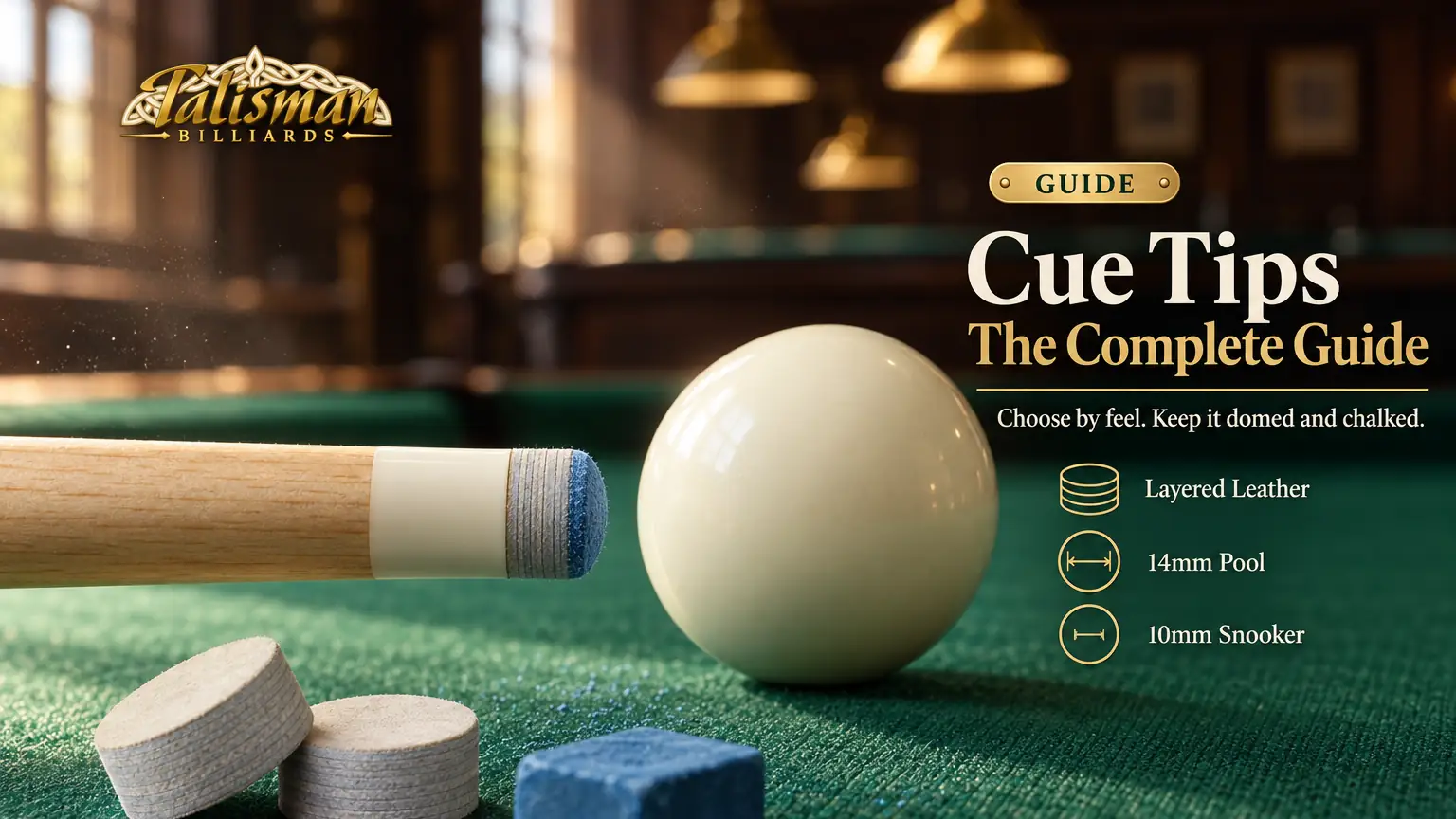
Cue Tips: The Complete Guide
Cue tips explained by a tip maker: solid vs layered leather, pool and snooker sizes, hardness, shape, care, replacing, and which tip suits your game.
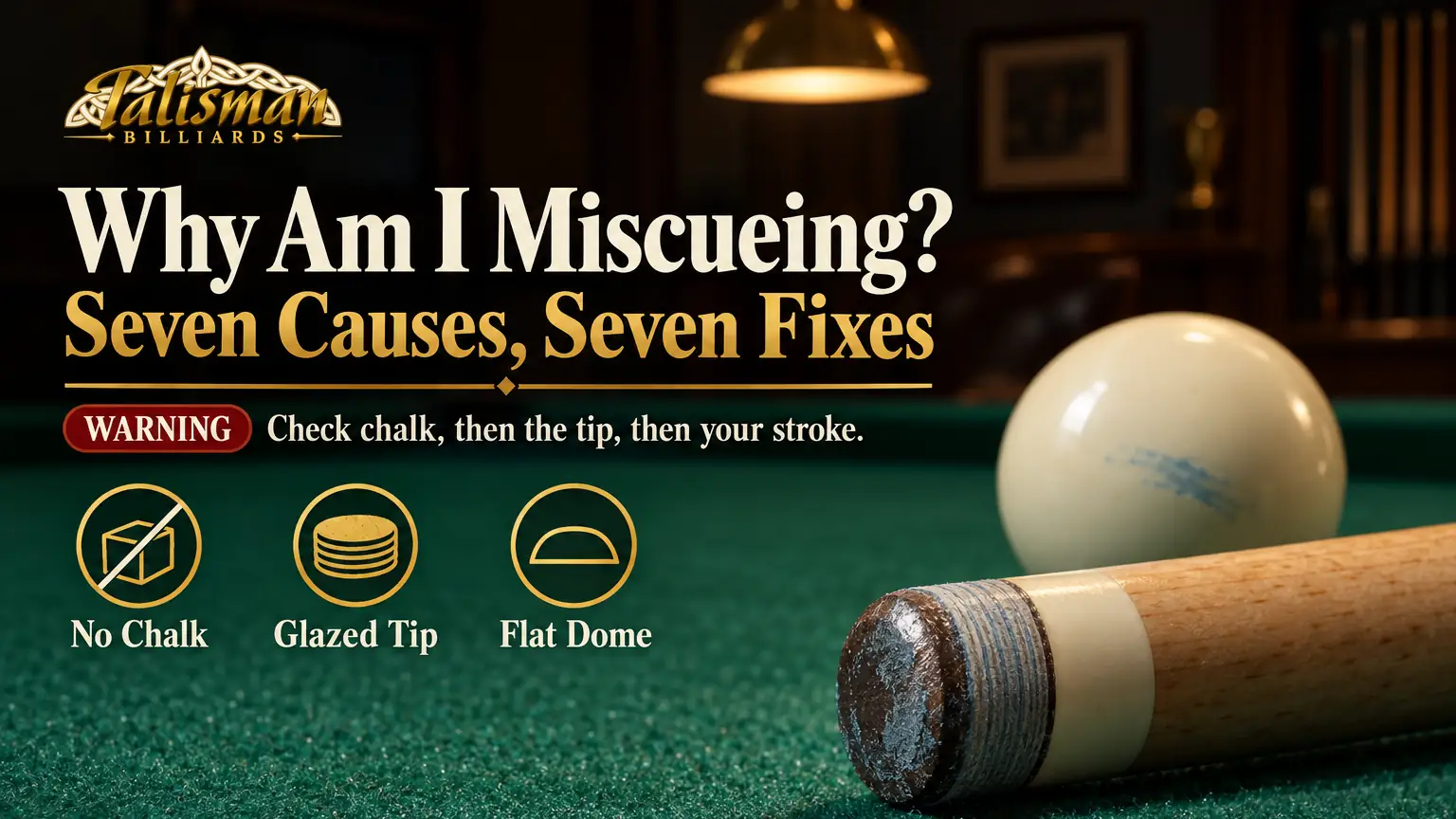
Why Am I Miscueing? Seven Causes and How to Fix Each
Why you miscue in pool and how to stop: chalk, a glazed or flat tip, hitting too far off centre, a rushed stroke, and when the tip itself is finished.
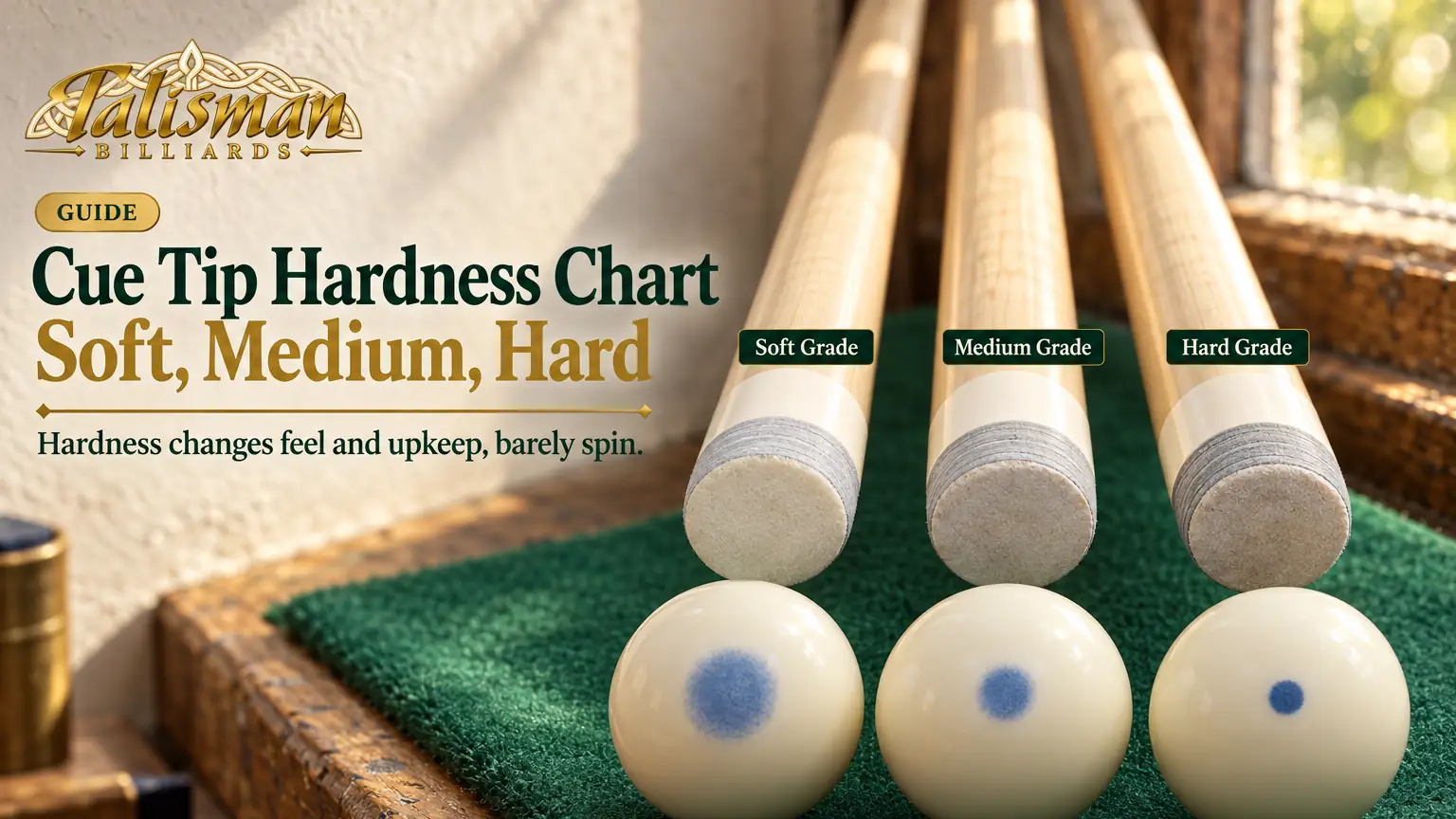
Cue Tip Hardness Chart: Soft vs Medium vs Hard
A cue tip hardness chart by feel, not invented numbers: how soft, medium, hard and extra hard tips compare on spin, chalk, shape and upkeep.